The Green River basin ships more soda ash than anywhere on earth, the Powder River and Bighorn basins move coal, oil, and gas, refineries line the Yellowstone at Billings and Laurel, and bentonite and beet sugar fill out the rail map. It’s railcar country with long distances and thin local fabrication, which is exactly where pre-engineered access, mobile units, and a maintenance program that remembers your part numbers earn their keep.
Wyoming enforces under its own State Plan; Montana runs federal OSHA, so a company with spots in both states is quietly working two rulebooks, and our reads name which one applies. But the bigger judgment call out here is logistical: distance. A gangway that gets hit at a trona loadout can’t wait on a custom fab cycle, which is why we push pre-specced replacements and serviced springs, and why the mobile unit is often the honest answer for the spur that loads twice a month.
The exposure profile is classic heavy-loading: car tops, hatch work in weather, and racks that run every shift. Full decks where throughput earns them, gangway-and-cage where it doesn’t, and the winterized read matters, because ice on a car top changes what “likely to be cited” looks like.
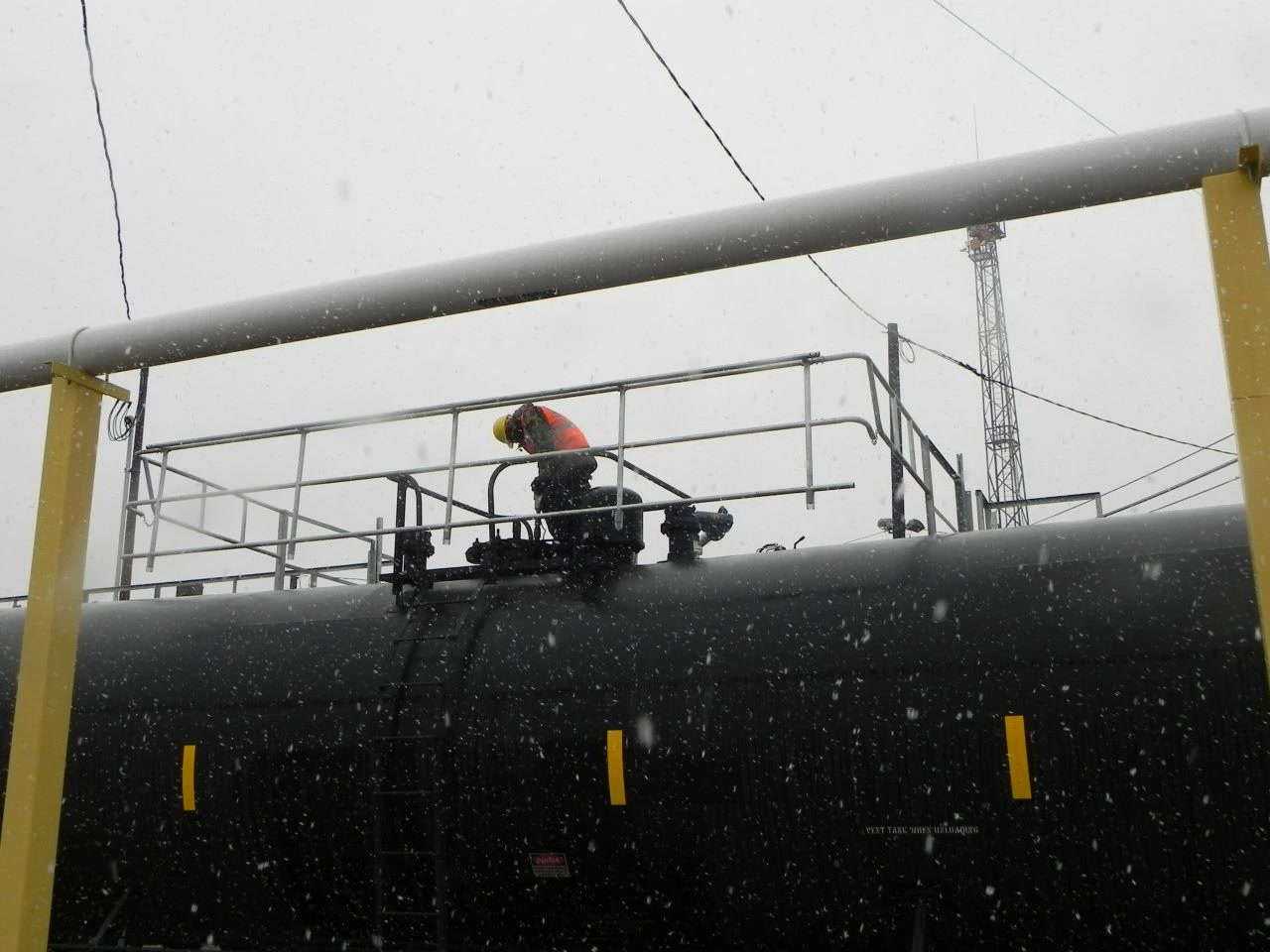
The Green River soda-ash district and the bentonite belt. High-cycle railcar loadout, gangways and cages built for the duty, parts pre-specced.
The Billings to Laurel row and the Powder River basin. Rack access, rigid-rail arrest over the spots you can’t guard, two state rulebooks tracked.
Beet campaigns and grain loadout across both states. Seasonal surge spots where a mobile unit beats a fixed install it can’t justify.
Your regional manager comes and stands in front of it. Reads it the way your state’s program is likely to, and hands you the right-sized fix with the drawing. Free, every time.
Book the visit →The spec, the measurements, or a few photos. Send it and we’ll turn the quote fast, engineered drawing and code references attached.
Start an RFQ →Yes. Wyoming and Montana are core energy-country coverage: the Green River basin, Casper and the Powder River, Cheyenne on I-80/I-25, and the Billings to Laurel row up through Great Falls on I-90/I-94.
Wyoming runs its own State Plan; Montana runs under federal OSHA. The standards are close cousins, but the enforcing agency differs, and our site reads name the applicable program explicitly. Framed as how that agency is likely to judge the spot.
That’s the scenario we plan for up front: our maintenance program logs your part numbers and pre-specs replacements, so strike recovery is a shipment, not an engineering project. For interim coverage, a mobile unit can stand in the same week.
Railcar loading access. Gangways, cages, and full decks. At the trona, bentonite, and refining operations, winterized reads on car-top work, and mobile units plus maintenance coverage for the remote and seasonal spots.