Highway 99 runs through the densest milk shed and food-processing corridor in America. Dairy plants, nut and tomato processors, wineries, and bulk receiving from Sacramento to Bakersfield, with Kern County’s energy work at the southern end. It’s tanker-top country: cream and sweetener receiving, washdown at the hatch, sampling on the catwalk. Cal/OSHA governs all of it, and the right-sized answer is usually smaller than the catalog wants to sell you.
A cream-receiving bay looks simple until you count the tasks: hose-up, venting on the older trailers, sampling at the hatch, washout. Some of those put a person on top of a tanker over four feet, some don’t, and the difference between a full platform, a single gangway with a cage, and nothing-but-procedure is exactly the judgment call the catalog can’t make. We walk it, read it against Title 8 and the federal floor, and put the answer, including the don’t-need half. In writing.
The same discipline runs the rest of the corridor: washdown service argues for aluminum and stainless before galvanized, nut and tomato seasonality argues for mobile units at spots that only run hard three months a year, and the Saputo-scale turnarounds our principals have documented in this Valley prove the modular timeline is real.
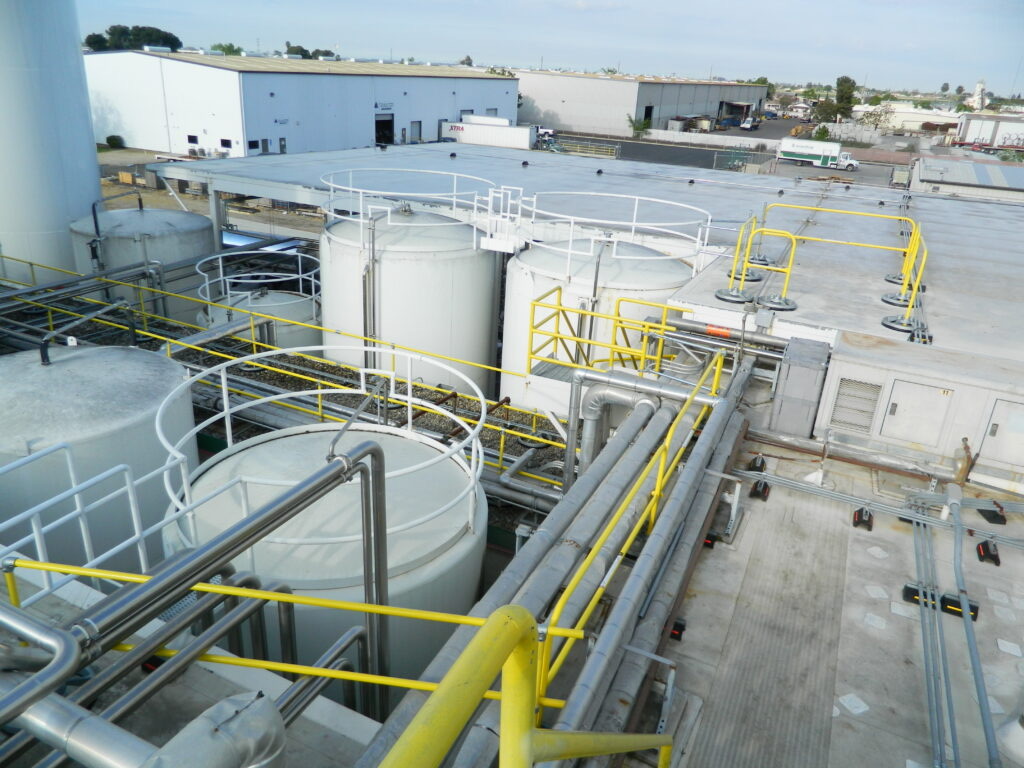
Chino-scale receiving up and down 99. Tanker-top access, washdown-grade gangways and cages, and the bottom-load myth, un-taught.
Seasonal surge operations. Mobile gangways for the crush and the harvest, modular platforms for the year-round lines.
Bakersfield’s oil and gas work. Loading access, rigid-rail arrest where the task can’t be guarded, read against Title 8.
Your regional manager comes and stands in front of it. Reads it the way your state’s program is likely to, and hands you the right-sized fix with the drawing. Free, every time.
Book the visit →The spec, the measurements, or a few photos. Send it and we’ll turn the quote fast, engineered drawing and code references attached.
Start an RFQ →Yes. The whole Highway 99 / I-5 corridor from Sacramento to Bakersfield, which holds the densest food-processing and dairy cluster we serve anywhere, plus Kern County’s energy operations.
California enforces its own Title 8, so a Valley read cites state sections alongside federal 1910, and the practical questions are task-level: which receiving tasks actually put a person above four feet, and which don’t. That task-by-task read is what decides between a platform, a gangway and cage, or neither.
Often no. A seasonal spot frequently pencils out to a mobile gangway unit instead of civil work and a fixed platform. Same guarded, level access, redeployable the rest of the year. That’s a right-sizing call we put in writing on the walk.
Tanker-top and receiving-bay access at the dairies, washdown-grade platforms and gangways in food service, mobile units for seasonal processors, and rooftop protection over the processing floors.