Some work can't be railed off. The crew is on top of the truck, the railcar, or the tote, or the job travels the length of a loading bay where a guard rail would be in the way of the work. That's the case OSHA's hierarchy moves down to personal fall arrest, and it's where an overhead rigid rail earns its keep: an engineered track overhead keeps the worker tied off the entire task, with a self-retracting lifeline that follows them. Free-standing or anchored, single worker to a full multi-user bay.
We lead with restraint, and that means leading with the cheaper, passive option. OSHA's hierarchy puts a guardrail first. It protects everyone with no harness, no anchor, no rescue plan, and only moves to personal fall arrest when the hazard genuinely can't be guarded. So the first thing we do on a walk is ask whether the edge is railable. If it is, we'll send you back to a guardrail and say so plainly; it costs less and asks nothing of the worker.
But on top of a tank car, a tanker, or a tote, or down a bay where the work moves the length of the hazard. There's nothing to rail. That's where this system is the honest answer, not the upsell: an engineered overhead rail that keeps a worker tied off, with the lifeline overhead so a fall is caught short and clean. The judgment is knowing which case you're actually in.
Every configuration keeps the lifeline overhead and the worker tied off through the whole task. The right one depends on how wide the work area is and how many people are in it at once.
One column, one rail, over a single spot. The truck bay or the one car position that needs tie-off. The smallest engineered footprint for a congested area.
Modular and expandable to the length of the bay, with multi-user bypass so more than one worker can clip in and work without unclipping to pass.
Two parallel tracks for crews working both sides of a railcar or trailer at once. Full simultaneous coverage where throughput is high.
A forklift-moved unit. Fixed anchor point or a 20- or 40-foot truss rail. For the spot that's only worked a few times a month and doesn't earn a fixed install.
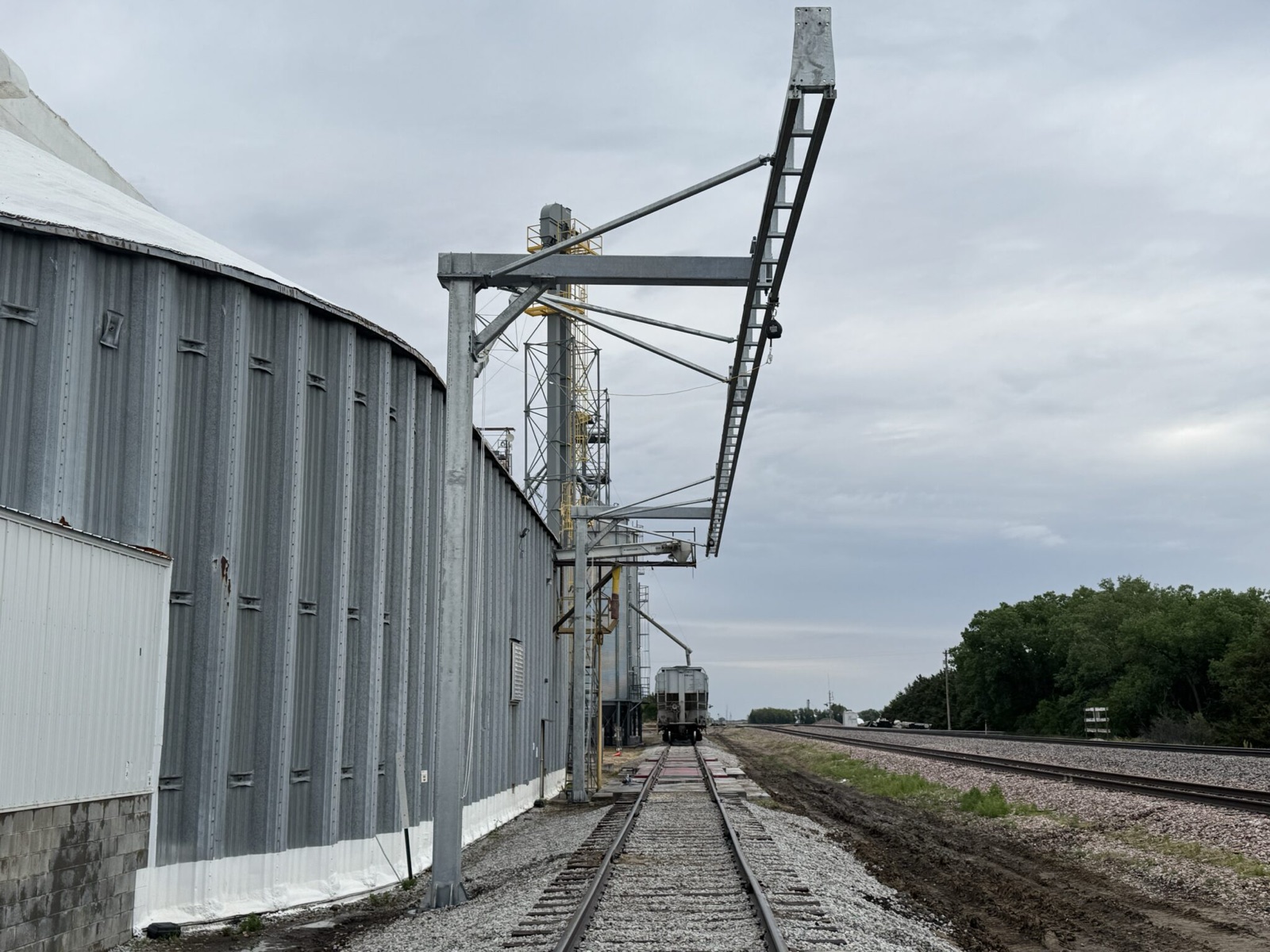
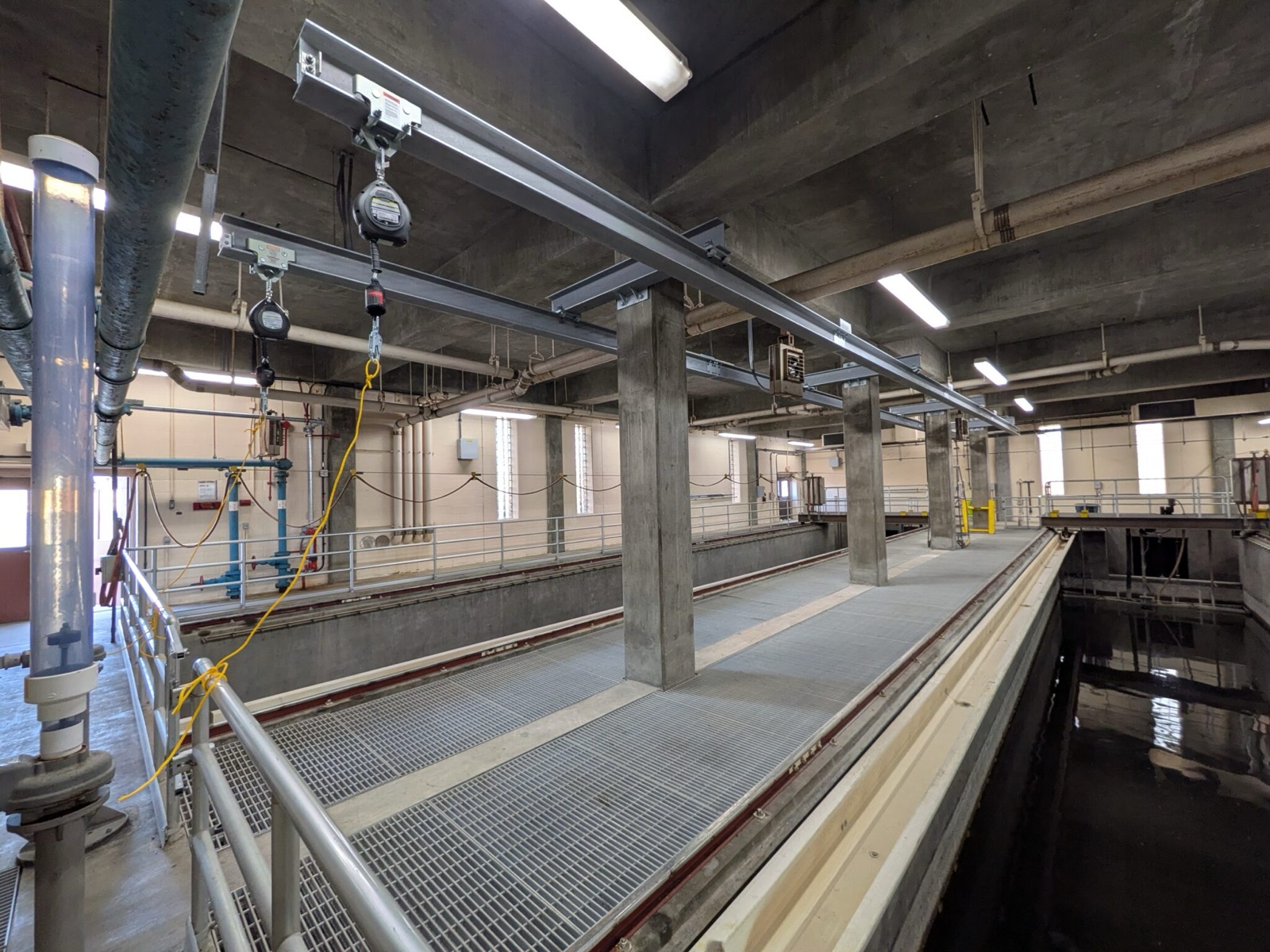
Truck, barge, and railcar loading bays. Oil-and-gas pads. The tote-fill station, the rail spur, the manufacturing line where the work happens up top and moves down the length of the car. These are the exposures behind our railcar top access and tanker top access pages, and very often the overhead rail and the gangway get specified together off a single walk, because the gangway carries the worker out and the rail keeps them tied off once they're there.
Not sure whether your spot needs a gangway, an overhead rail, or both? That's exactly the read a free site visit settles, including the spots that only need a portable unit, not a fixed system.
Tell us the work area. What's loaded, how the crew moves, how many people, how often, and we size the system and turn the layout. Engineered drawings and the load basis come with it.
| System | Overhead rigid-rail fall arrest. Free-standing on columns or structure-anchored; single-column, multi-column, or dual-track |
|---|---|
| Users | Multi-user bypass on multi-column / dual-track; standard package includes two user sets (harness, self-retracting lifeline, trolley) |
| Portable option | Forklift-transportable. Fixed anchor point or 20-ft / 40-ft truss rail. For occasional-use spots |
| Environment | Engineered for all-weather outdoor racks and indoor bays |
| Standards | Engineered to OSHA & ANSI fall-protection requirements (personal fall-arrest systems, 29 CFR 1910.140 / ANSI Z359); 5-year warranty; made in USA |
| First, though | If the hazard is guardable, a passive guardrail comes first. We rule it out before quoting arrest |
| Often paired with | A gangway that carries the worker out to the car. The two get specified together off one walk |
When you can't guard the hazard. A guardrail is OSHA's preferred, passive answer and should be the first choice, but on top of a truck, a railcar, or a tote, and along a bay where the work travels the length of the hazard, there's no edge to rail off. That's where the hierarchy moves to personal fall arrest. If the edge is actually guardable, we'll send you back to a guardrail. It's cheaper and protects everyone.
An engineered overhead track. Free-standing on columns or anchored to the structure. That a self-retracting lifeline rides along on a trolley. The worker clips in once and the trolley follows them the whole task, keeping the lifeline overhead so a fall is arrested with minimal free-fall and no swing into structure. It runs from a single column over one spot to dual-track systems that cover a full bay.
Yes. Multi-column and dual-track systems are built for multi-user bypass, so two crews can work simultaneously on independent trolleys without unclipping to pass. The standard package is configured with two complete user sets. Harness, SRL, and trolley, and scales from there.
Then you probably don't need a fixed install. A portable, forklift-moved system. A fixed anchor point or a 20- or 40-foot truss rail. Covers the spot worked a few times a month and moves to the next one. We size to how often the spot actually runs, and we'll tell you when portable is the right, smaller answer.
We walk the bay, decide guardrail-vs-arrest honestly, and size the system. Fixed or portable, single or multi-user. With the drawing. Free, every time.
Book the visit →Bay length, what's loaded, how many users, indoor or out, or a few photos. Send it and we'll turn the layout and quote fast, drawing and standards attached.
Start an RFQ →