Two of the West’s main lines cross in Albuquerque. I-25 and I-40, and the metro around the junction runs manufacturing, semiconductor-scale plants in Rio Rancho, food and beverage processing, and a growing distribution market. Our New Mexico coverage leads exactly where that mix points: modular platforms on the production floors and rooftop fall protection over them. With loading access down the SE corner’s energy and potash country handled by the same team.
Albuquerque’s exposure profile looks more like a manufacturing city than a bulk-loading one: mezzanines and conveyor crossings on production floors, valves and filters up ladders, and metro rooftops full of units, hatches, and skylights nobody guarded. That’s modular-platform and non-penetrating guardrail country. Bolt-together fixes that quote in days and close the most commonly cited exposures for the least money.
New Mexico enforces under its own State Plan. The Occupational Health & Safety Bureau, and our reads frame how the state program is likely to judge the spot. The heavier book is real too: potash and energy loadouts in the southeast, cement in the Sandia foothills, rail along the southern corridor. Gangway and cage work routed through the same regional coverage, sized to how each spot actually runs.
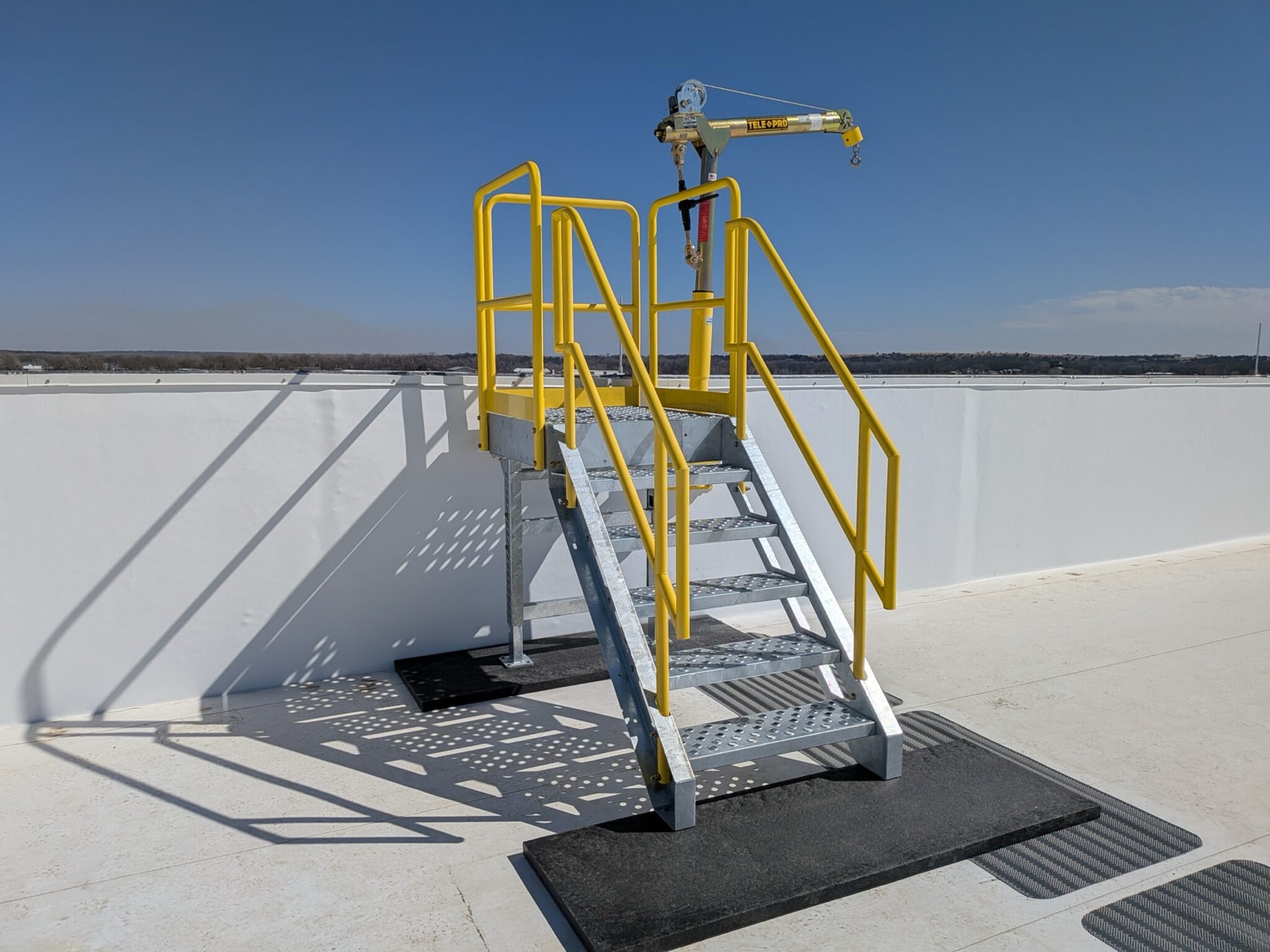
Albuquerque and Rio Rancho production floors. Mezzanine access, crossovers, work platforms, and the standing scaffold that never came down.
The crossroads distribution market. Perimeter guardrail, hatch guards, and skylight screens, non-penetrating throughout.
The Permian’s New Mexico side and the Carlsbad potash district. Car-top access, loading gangways, and rigid-rail arrest where the work can’t be guarded.
Your regional manager comes and stands in front of it. Reads it the way your state’s program is likely to, and hands you the right-sized fix with the drawing. Free, every time.
Book the visit →The spec, the measurements, or a few photos. Send it and we’ll turn the quote fast, engineered drawing and code references attached.
Start an RFQ →Yes. The Albuquerque metro and Rio Rancho are the core of our New Mexico coverage, led by the modular-platform and rooftop book, with the I-25 and I-40 corridors and southeast New Mexico’s energy country handled by the same team.
Yes. New Mexico runs its own program through the Occupational Health & Safety Bureau. The standards track federal 29 CFR 1910 closely; our site reads name the state program and frame everything as how it is likely to judge the spot, never as a guarantee.
Fast. Pre-engineered modular platforms typically quote in days with a preliminary sketch, and standard configurations ship in one to two weeks on the I-40/I-25 main lines. Rooftop guardrail and hatch protection are standard parts, not custom fabrication.
Mezzanine and crossover platforms on manufacturing floors, rooftop guardrail and hatch/skylight protection over the metro’s plants and DCs, and loading access at the potash and energy operations in the southeast.