North Las Vegas and the Apex corridor are putting up distribution and manufacturing square footage as fast as anywhere in the country. Square miles of brand-new membrane roof, every acre dotted with units, hatches, and skylights. Around it: the cement, aggregate, and gypsum operations feeding the boom, Henderson’s industrial-chemical legacy, and the transload lanes that make Vegas the Southwest’s crossroads. Nevada enforces through its own program, and we cover the valley direct.
Boom markets produce two bad habits at once: brand-new buildings that skip fall protection because “the roof is new,” and vendors who size every new spot XL because the capital is flowing. Both fail the same walk. A new membrane roof full of units and skylights carries the same exposures as an old one. It just deserves a non-penetrating fix that doesn’t void a young warranty. And a new line deserves the right-sized spec, not the flagship-by-default.
Nevada enforces under its own State Plan. Nevada OSHA, under the Division of Industrial Relations. The standards track the federal book closely, and our reads name the state program and frame everything as how it’s likely to judge the spot. Cement, aggregate, and gypsum country south and east of the valley runs on our cement playbook; Henderson’s chemical corridor reads through the mid-market chemical lens.
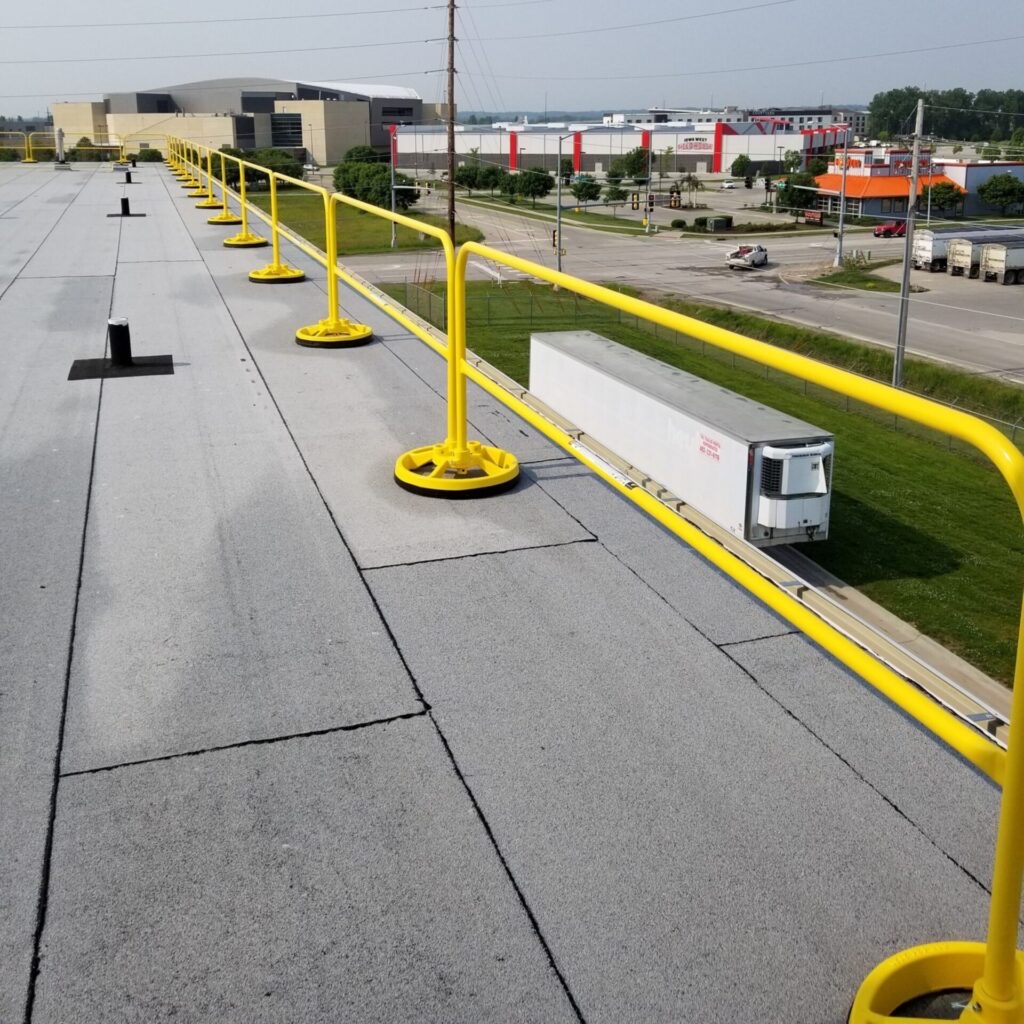
North Las Vegas and Apex. Perimeter guardrail, hatch guards, and skylight screens, all non-penetrating on young membranes.
The plants and terminals feeding the boom. Offset cages, lockdown gangways, and strike-recovery parts on the loadouts that run every shift.
The industrial-chemical corridor and the I-15 transload lanes. Right-sized loading access, mobile units for the spots still settling into a schedule.
Your regional manager comes and stands in front of it. Reads it the way your state’s program is likely to, and hands you the right-sized fix with the drawing. Free, every time.
Book the visit →The spec, the measurements, or a few photos. Send it and we’ll turn the quote fast, engineered drawing and code references attached.
Start an RFQ →Yes. The whole valley plus the Apex industrial corridor and the I-15 lanes north and south, covered direct with regular presence rather than through a third party.
Yes. Nevada runs its own program (Nevada OSHA, under the Division of Industrial Relations). The written standards track federal 29 CFR 1910 closely, but the enforcing agency is the state’s, and our site reads are framed as how Nevada OSHA is likely to judge the spot, never as a guarantee.
That’s the flagship: freestanding, counterweighted guardrail plus non-penetrating hatch and skylight protection, no drilling, no flashing, no warranty argument. It’s the right first conversation for every new building in the valley.
Rooftop fall protection on the new distribution and manufacturing buildings, cement and aggregate loading access at the plants feeding the construction boom, and mobile gangways at transload spots.