The open hatch a worker climbs out of. The skylight that looks like a floor and isn't. The ladderway with a sagging chain instead of a gate. The mezzanine edge a forklift backs to. These are the openings inspectors find first, and they're the least expensive things on the roof to fix. Self-closing hatch rails, non-penetrating skylight screens, spring gates, and pivot gates. Galvanized, safety-yellow, or stainless, with non-penetrating and no-tool options. Referenced to OSHA 1910.28(b)(3), 1910.29, and 1910.23.
None of these need a fabricator or a roofer. Most ship in standard sizes and go up without penetrating the roof, which is why they're the first thing we close on a walk and the easiest line on the quote to say yes to. Arrived from a specific problem? Start at an open roof hatch or a skylight someone could fall through.
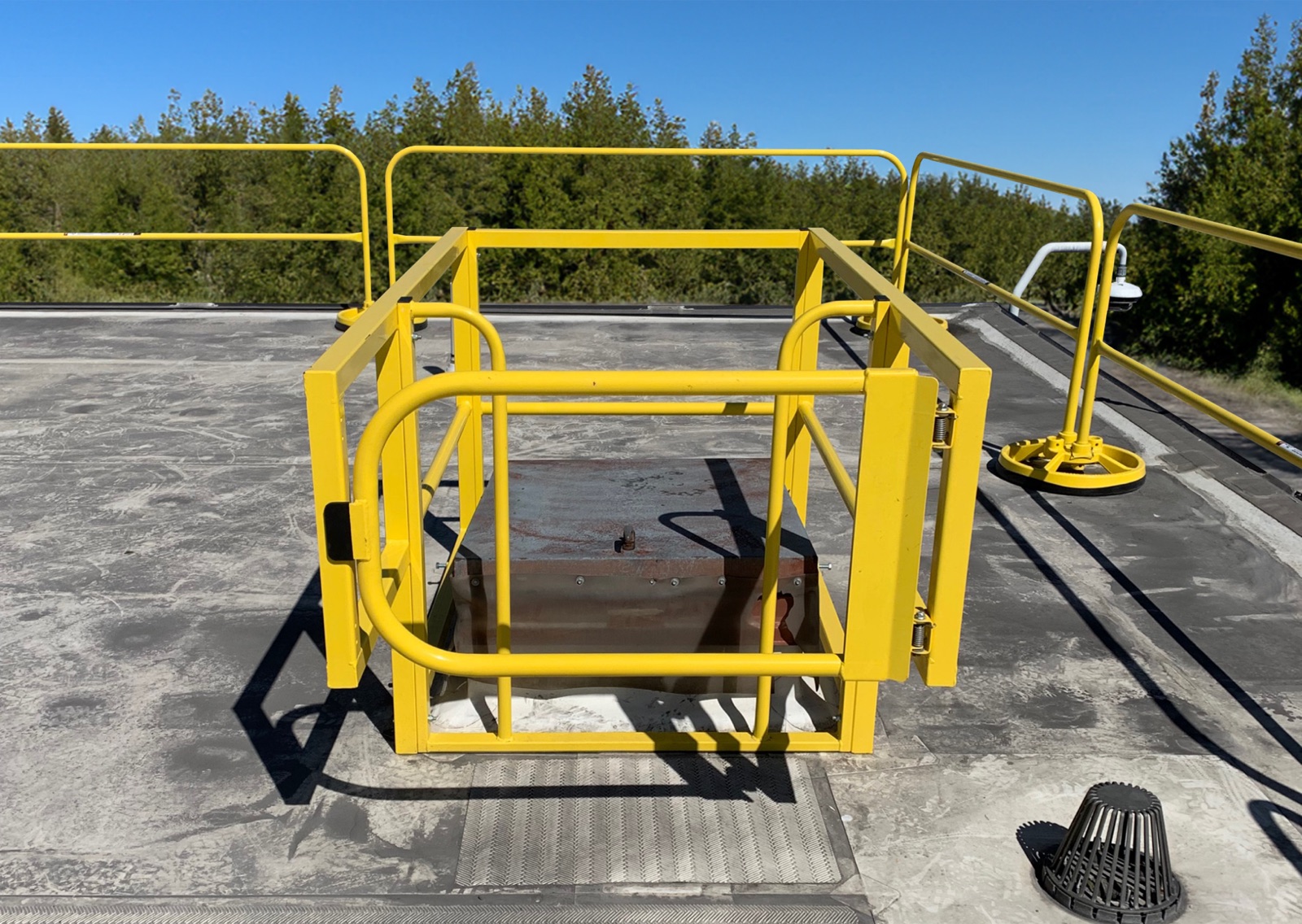
A fixed rail ringing the hatch opening with a self-closing gate on the ladder side, so the worker climbing out is never exposed to the open hole. Full size range; non-penetrating and no-tool options. A cover protects the hole when closed; the rail protects the person when it's open.
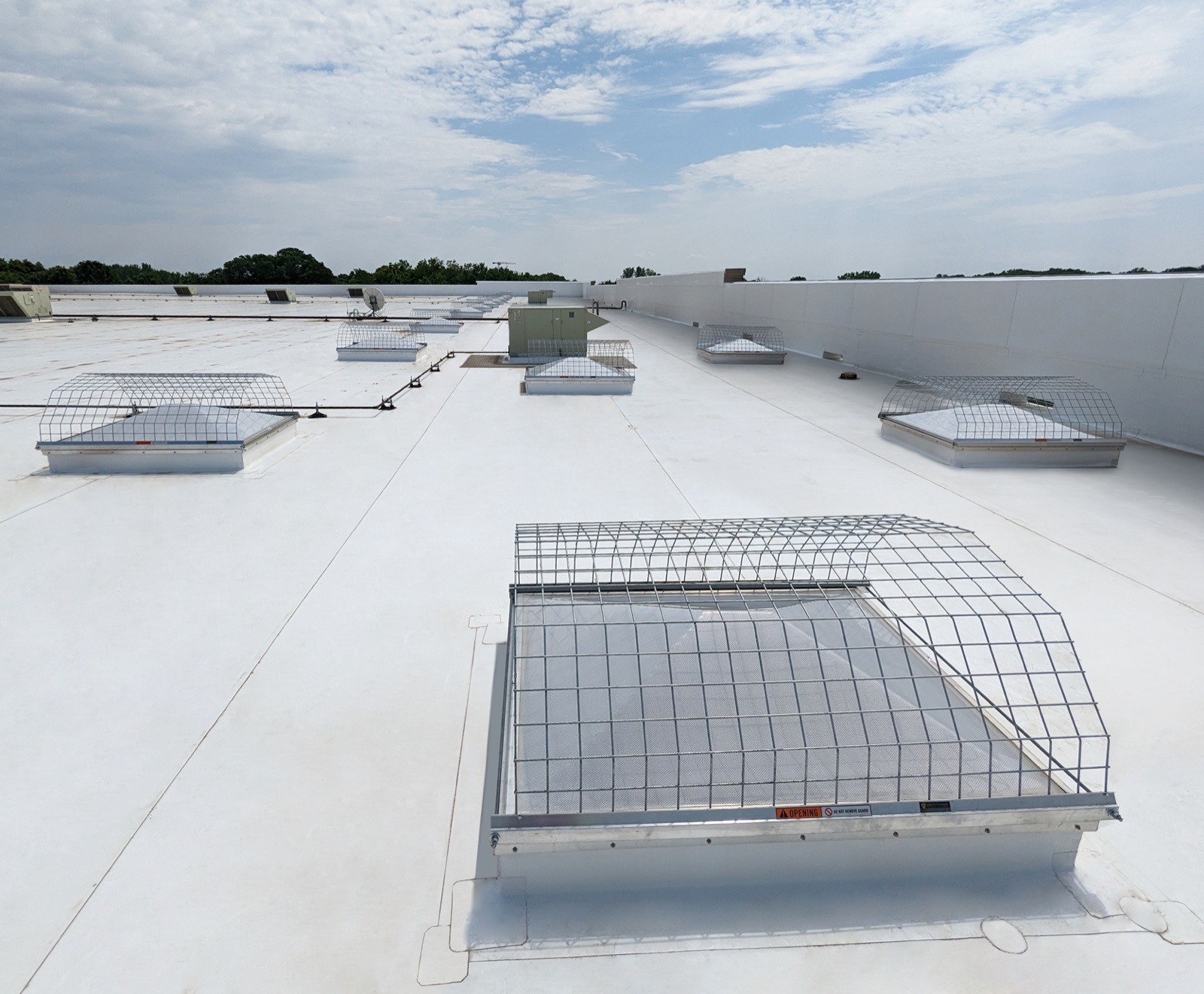
A load-bearing screen or cage over the skylight curb, because a plastic dome is weatherproofing, not a fall barrier. Removes a recurring fatality hazard without touching or penetrating the skylight itself. 1910.28(b)(3) territory.
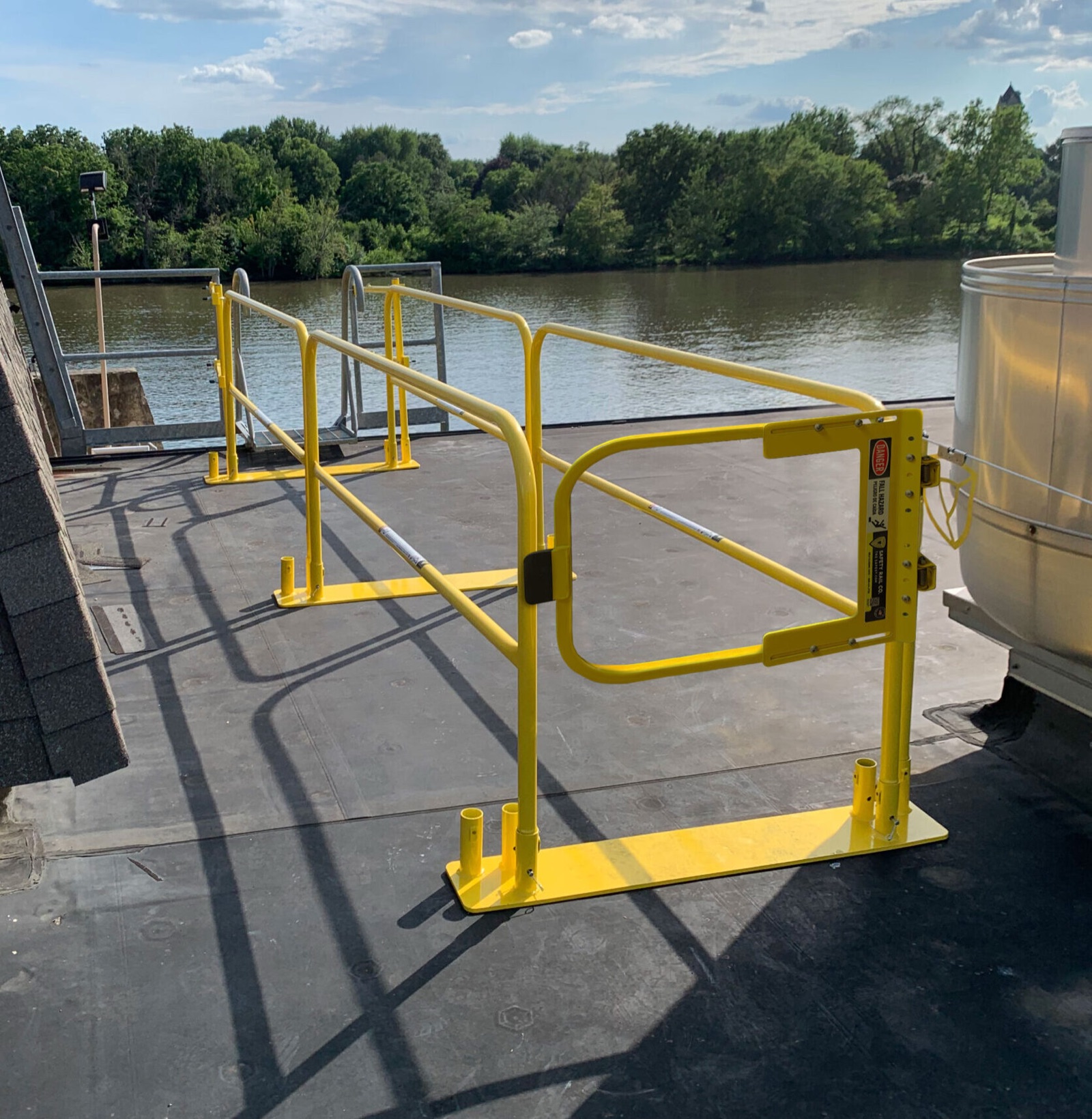
Spring gates for ladderway openings, stair tops, and rooftop landings. 16″ to 39″ widths, galvanized, safety-yellow, or stainless, one-person install. The thing OSHA's 1910.23 wants where a chain is hanging today.
The dual gate for a pallet-drop edge: as the loaded side opens, the worker side closes. One rail always between the person and the fall. Single- and double-pallet widths, integrated toeboard, built for daily forklift traffic.
Stainless on the gates matters more than it looks: washdown lines, food-grade rooms, and corrosive process areas eat galvanized hardware. If your openings are in food & beverage or chemical service, we'll spec the material to the environment, not the catalog default.
Plants spend on the obvious edge and walk past the opening, because the opening doesn't look like a fall until someone's standing at it with both hands on a ladder. But OSHA reads a hole in a walking-working surface the same way it reads a roof edge. A fall hazard that needs a rail, a gate, or a rated cover. The hatch cover protects the hole; it does nothing for the worker at the open hole. The skylight dome sheds rain; it won't hold a person who steps on it. The chain across the ladderway sags the day it's hung.
The good news is the math runs in your favor: these are the lowest-dollar fixes in the whole fall-protection conversation, and they retire some of the most commonly written exposures. On a walk, they're the first things we close, and the line on the quote we expect you to approve without a committee.
When we walk a roof for an edge problem, the openings are what we find on the way: a hatch with a cover but no rail, two skylights near the service path, a ladderway with a chain. None of it is expensive, all of it is citable, and it closes in a single visit's worth of standard parts. The sample read at right is the shape of what you'd get. What we saw, how we'd read it against the code, what you need, and the part we put in writing that the incumbents won't: what you don't.
Openings often pair with a perimeter problem. See rooftop & perimeter guardrail, and both get priced off the same walk. Book the free site visit →
Give us a count of hatches, skylights, ladderways, and mezzanine openings. With rough sizes or photos, and the quote comes back fast. Engineered drawings follow with the order.
| Roof-hatch rails | Fixed rail around the opening + self-closing gate at the ladder; full size range; non-penetrating & no-tool options; referenced to 1910.28(b)(3) / 1910.29 |
|---|---|
| Skylight protection | Load-bearing screen or cage over the curb; non-penetrating & no-tool options; full size range; referenced to 1910.28(b)(3) |
| Self-closing gates | Spring-loaded; 16″ to 39″ widths; galvanized, powder-coat safety yellow, or stainless; indoor/outdoor; one-person install; referenced to 1910.23 |
| Mezzanine pivot gates | Dual gate. One side always closed; single- & double-pallet widths; integrated toeboard; referenced to 1910.29 |
| Material | Galvanized standard · safety-yellow powder coat · stainless for washdown/food-grade/corrosive service |
| Related | Roof edge & parapet → rooftop & perimeter guardrail; truck/railcar tops → rigid-rail fall arrest |
An open hatch is a hole in a walking surface, and OSHA treats it as a fall hazard under 1910.28 and 1910.29. The cover alone doesn't protect the worker standing at the open hole reaching down the ladder. A hatch guard rings the opening with a fixed rail and a self-closing gate at the ladder side, so a worker climbing out is never exposed to the open edge. It's one of the lowest-cost fixes that closes a commonly cited exposure.
Because a plastic dome is not a fall-protection surface. Under 1910.28(b)(3), a skylight in a walking surface has to be guarded by a screen, a cover rated to hold a person, or a railing. The dome is weatherproofing, not a load-rated barrier, and falls through skylights are a recurring fatality. A non-penetrating screen or cage over the curb removes the hazard without touching the skylight itself.
A chain across a ladderway or stair opening isn't what OSHA's 1910.23 asks for. It sags, it gets left unhooked, and it's the first thing an inspector tests. A spring-loaded self-closing gate closes itself every time, with no decision left to the worker. They fit ladderway openings, stair tops, mezzanine access points, and hatch landings, in widths from about 16 to 39 inches, in galvanized, safety-yellow, or stainless.
A pivot (dual) gate. As the loaded side opens to the floor, the other side closes to the worker, so one rail is always between the person and the edge. Protection while the pallet is staged and while it's lifted, with no moment where the edge is open. Built with an integrated toeboard and sized for single- or double-pallet openings.
A count of hatches, skylights, and ladderways. With rough sizes or photos. Is enough to quote. Drawings follow with the order.
List the openings →We'll walk the roof, catch the openings and the edge together, and right-size the fix list, including the parts you don't need.
Book the visit →