It went up for a quick job. It never came down. Now the rental bills every month, a competent person has to re-inspect it every shift, components have wandered, tags have expired, and the inspector flags it every time they walk past. The access point isn't temporary, so the access shouldn't be either. A pre-engineered platform ends the rental clock, ends the recurring citations, and is built once to the standard.
Scaffold lives under a demanding standard for a reason: it's meant to come down. It requires competent-person inspection before every shift, proper tagging, complete planking and guardrails, and safe access, and over months of standing service, those slip. A brace gets borrowed for another job, a tag expires, a plank goes missing, someone modifies it without a re-design. Every one of those is a finding waiting to happen, which is why standing scaffold is an inspection magnet.
A fixed walking-working surface answers to a different, simpler bargain: built once to 29 CFR 1910.28 and 1910.29, with permanent guardrails and stairs, it holds without depending on a perfect daily inspection. For an access point that isn't going away, that's not just cheaper. It's structurally sounder. The scaffold manages risk every shift; the platform removes it once.
Whatever the scaffold was covering. A valve, a piece of equipment, a crossover, a work area. There's a pre-engineered, no-weld answer sized to it.
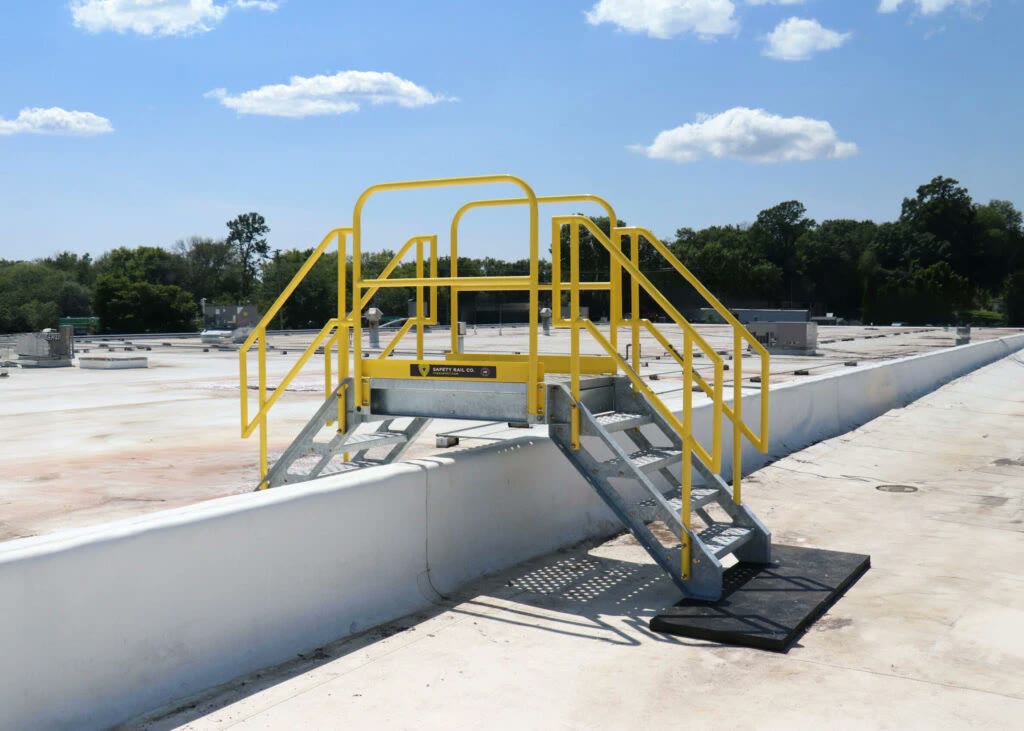
One valve, one filter, one instrument. A right-sized platform that puts an operator safely at the task. The clean replacement for the scaffold tower that's been parked at one piece of equipment for a year.
For crossing a pipe rack, a conveyor, or a containment berm, or for a standing work area: bolt-together stairs and deck, reconfigurable when the line changes. No-weld, so it installs without hot work.
Pre-engineered standard configurations move in days and install in a planned window, so the rental clock stops sooner, and the drawing, load rating, and code reference come in the package.
A custom-fabricated, welded-in monument to replace a scaffold around one valve. The right-sized modular platform is the cheaper and faster answer, and it reconfigures when the work moves. We size it to the access point, not to the biggest structure a fabricator can quote.
For any access point that stays in place for months, usually yes. Rental scaffold bills every month it stands, needs periodic re-inspection and tag-out, and keeps drawing citations. A pre-engineered modular platform is a one-time cost that ends the rental clock, removes the recurring inspection burden, and is built to the standard. The longer the scaffold's been up, the more lopsided the math gets.
Yes. A pre-engineered, bolt-together modular platform is designed to the access point the scaffold was covering. The valve, the equipment, the crossover, the work area, and installed in its place. It's no-weld, so it goes in without a hot-work permit, and it ships with the engineered drawing and OSHA reference the scaffold never had.
Scaffold is built for temporary use, so it requires competent-person inspection before each shift, proper tags, complete planking and guardrails, and safe access, and over months those slip. A permanent engineered platform with fixed guardrails and stairs is built once to 1910.28 and 1910.29 and holds up without depending on daily re-inspection.
Because it's pre-engineered and bolt-together, a standard configuration is quoted in days and installed fast, often in a single planned window, no hot work, no shutdown of the surrounding area. The drawing, load rating, and code reference come with it as the documentation the scaffold never provided.
Most plants have more than one. The tower that's been at the same valve for a year, the deck around the exchanger, the planks across the pipe rack. We walk them, pull the rental dates, and hand you the replacement that ends the clock. Ranked by which ones are bleeding the most in rent and findings. Including the part nobody else puts in writing: the scaffold that really is temporary and should stay scaffold.
Three ways in: the free Site Visit (one scaffold, replaced and quoted) · the Operational Assessment (every standing scaffold logged against rent, re-inspection burden, and the standard) · the Fast-Lane RFQ (know the access point? send it, get the platform quoted).
We come stand at it. Read the access point, run the rent-vs-replace math, and hand you the permanent platform that ends the clock, with the drawing. Free, every time.
Book the visit →What the scaffold's covering, the heights, the footprint, or a few photos. Send it and we'll turn the platform quote fast, engineered drawing and code references attached.
Start an RFQ →